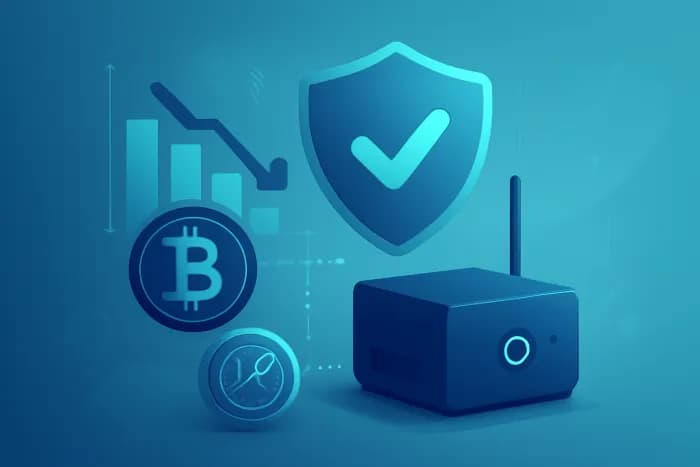
Proof-of-Physical-Work Insurance: Hedging DePIN Node Revenue Volatility
Explore on-chain parametric insurance primitives designed to help DePIN operators hedge against unpredictable revenue fluctuations from real-world hardware networks like Helium, PEAQ and WeatherXM.
Title: Proof-of-Physical-Work Insurance: Hedging DePIN Node Revenue Volatility
Introduction
Decentralized Physical Infrastructure Networks (DePIN) such as Helium, Peaq, and WeatherXM turn everyday devices—hotspots, sensors, even weather stations—into token-earning machines. Yet hotspot operators often experience whiplash-like swings in daily HNT rewards, ranging from $0 to $300 depending on location, network density, and random Proof-of-Coverage cycles citeturn3search1 citeturn3search0. Staking yields on Peaq nodes have fluctuated between 5% and 15% APY as network parameters evolve citeturn7search2, and the WXM token price has varied by over 12% in a single week citeturn5search0. Such volatility imperils hardware operators, making cash-flow projections and cost coverage difficult.
What if DePIN node operators could hedge these revenue swings—just as farmers hedge crop yields or airlines hedge fuel prices? By deploying on-chain Proof-of-Physical-Work insurance, parametric contracts would automatically pay out stablecoins when key metrics (data packets transmitted, kWh delivered, or oracle-reported revenues) fall below predefined thresholds. This article outlines the design of these insurance primitives, pricing models, reinsurance structures, LP yield opportunities, and regulatory considerations to make DePIN cash flows bankable for mainstream investors.
DePIN and Proof-of-Physical-Work: A Primer
DePINs leverage blockchain to tokenize real-world services. Helium hotspots validate Proof-of-Coverage and earn HNT by relaying IoT traffic. Peaq is a Layer-1 blockchain optimized for machine economies, where operators stake PEAQ tokens or run nodes to earn network security rewards citeturn7search0. WeatherXM deploys community-owned weather stations, rewarding station owners with WXM tokens for hyperlocal meteorological data citeturn4search0. Collectively, the DePIN sector has ballooned; a World Economic Forum report projects growth from a $30–50 billion current market to $3.5 trillion by 2028 as AI and blockchain converge citeturn10search0.
Proof-of-Physical-Work insurance adapts parametric insurance concepts—well known in agriculture and travel—to DePIN. Instead of indemnifying assessed losses, parametric payouts trigger when objective on-chain metrics, sourced via oracles, breach policy thresholds. This approach eliminates lengthy claims adjudication and aligns with DeFi’s automated ethos.
With this foundational understanding in place, let's examine the specific revenue risks facing DePIN operators.
Revenue Volatility in DePIN Operations
Helium hotspot operators face sharp reward swings because Proof-of-Coverage challenges are distributed randomly and cluster in active areas. On some days, neighboring hotspots all receive challenges, boosting rewards; on others, none do, resulting in near-zero earnings citeturn3search0. Cointelegraph data shows daily HNT rewards typically range from $0 to $300, with urban hotspots outperforming rural ones citeturn3search1.
Peaq staking yields are similarly dynamic. Network upgrades have introduced customizable validator commissions and altered reward timing, causing APYs to swing between 5% and 15% based on total staked supply and commission settings citeturn7search2.
WeatherXM operators earn WXM tokens for data contributions, but token price swings amplify revenue volatility. CoinGecko data shows WXM’s seven-day price range spanned $0.1672–$0.1884 (12.7% variation), and its 24-hour trading volume jumped 2.6% in a single day citeturn5search0.
These pronounced fluctuations underscore the need for innovative risk management tools.
Introducing Parametric On-Chain Insurance Primitives
To address these revenue swings, Proof-of-Physical-Work insurance uses smart contracts to:
- Monitor on-chain or off-chain data via decentralized oracles (e.g., Chainlink) for metrics like HNT rewards per epoch, PEAQ yield rates, or WeatherXM data points.
- Compare observed metrics against predefined triggers (e.g., average HNT earnings < $50/day over seven days).
- Automatically execute stablecoin payouts to covered operators when triggers are met.
Similar parametric models have proven effective:
- Ensuro’s flight delay insurance triggers payouts based on real-time aviation data using Chainlink oracles; they secured a Bermuda reinsurance license to operate within a regulated framework citeturn0search4.
- Otonomi’s marine cargo insurance leverages Chainlink feeds to resolve claims in 45 minutes, cutting administrative costs by 90% citeturn0search5.
In DePIN, a parametric contract might track:
- HNT tokens credited to an operator’s wallet per block via a Chainlink price feed.
- PEAQ staking reward rates reported on-chain.
- WeatherXM station uptime and data submission counts confirmed via hardware proofs.
Contracts lock policy premiums in stablecoins. If the chosen metric remains below the threshold for the policy term, the contract disburses stablecoins to the operator; otherwise, premiums stay in the pool.
Having defined the mechanics of these insurance primitives, we now turn to pricing and risk-sharing structures.
Coverage Pricing Models and Reinsurance Pools
Accurate premium pricing requires analyzing historical volatility and correlations: • Measure the standard deviation of daily HNT revenues, PEAQ APYs, or WXM prices across operators over the past 90 days. • Incorporate a base rate for administrative costs and resolution gas fees. • Add risk loading for model error, oracle downtime, and hardware failure rates.
Insurance capital pools, funded by underwriters, collect premiums and pay claims. To diversify risk, reinsurance pools—possibly managed by tokenized vehicles—can backstop large claims or systemic events (e.g., network halving impacting all operators).
Neptune Mutual’s parametric coverage marketplace shows how LPs can deposit stablecoins into coverage pools and earn a share of premiums citeturn0search3 citeturn0search2.
Armed with robust pricing frameworks and reinsurance backstops, the model opens new yield opportunities for liquidity providers.
Yield Opportunities for Liquidity Providers
Liquidity providers staking stablecoin capital into DePIN insurance pools earn:
- Premium fees proportional to committed coverage.
- Interest on idle capital via DeFi protocols like Aave or Compound.
Ensuro reinvests capital into DeFi to augment LP returns, blending insurance underwriting with yield farming citeturn0search4.
By tokenizing pool shares, LPs can trade or collateralize their underwriting exposure, unlocking composability and sophisticated risk-management strategies.
Finally, any on-chain insurance framework must navigate the regulatory landscape to ensure long-term viability.
Regulatory Considerations for Pseudo-Insurance Products
Parametric DePIN insurance skirts traditional insurance rules by avoiding discretionary claim assessments, but regulators may still scrutinize stability, solvency, and consumer protections: • Securities vs. Insurance: Coverage tokens could be deemed securities. The US SEC is exploring exemptions for on-chain financial products under “Project Crypto,” which may clarify the status of DePIN insurance citeturn11search0. SEC guidance also outlines how token-based yield products might fall under federal securities laws, depending on profit expectations and promoter influence citeturn11search8. • Licensing: Ensuro’s Bermuda reinsurance license exemplifies a regulated approach. Similar frameworks may be needed for on-chain entities offering parametric products. • Consumer Protections: Policy terms, triggers, and oracle sources must be transparent, and stablecoin collateral should be liquid and audited.
Partnering with regulated entities or obtaining sandbox exemptions can mitigate legal exposures while fostering innovation.
Conclusion
As DePIN networks mature, operators require tools to stabilize revenue and secure financing. Proof-of-Physical-Work insurance—on-chain parametric contracts backed by oracles and DeFi capital pools—offers a turnkey hedging solution. By automating payouts when revenue metrics dip, these primitives can make DePIN cash flows predictable, attract cautious investors, and unlock growth for real-world blockchain projects.