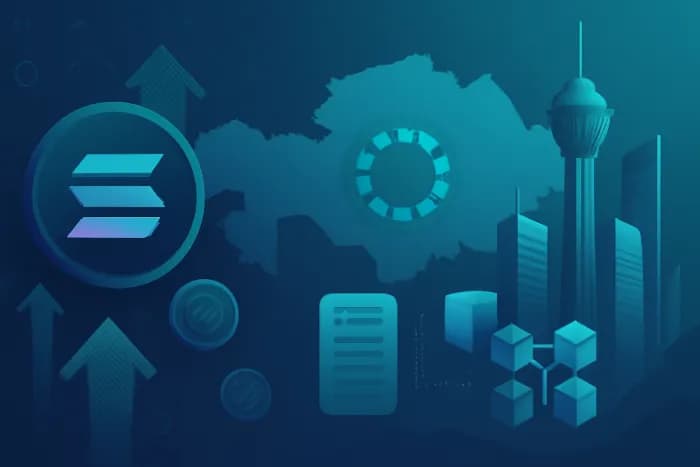
Solana & Kazakhstan’s Economic Zone: A Blueprint for State-Level Web3 Adoption
Kazakhstan's groundbreaking Solana Economic Zone (SEZ KZ) sets a new standard for state-backed blockchain ecosystems, combining tax incentives, regulatory sandboxes, and educational initiatives to attract global Web3 startups. This analysis explores its potential to reshape Central Asia's digital economy and drive SOL token demand.
Introduction
Kazakhstan has launched Central Asia's first blockchain-powered economic zone through a landmark partnership with the Solana Foundation. Announced at the 2025 Astana International Forum, the Solana Economic Zone (SEZ KZ) represents a strategic state-level experiment in Web3 adoption—combining regulatory innovation, renewable energy infrastructure, and developer education to position Kazakhstan as a blockchain hub[1][3]. This initiative offers a replicable model for emerging markets seeking to harness blockchain technology for economic transformation.
Anatomy of an On-Chain Economic Zone
SEZ KZ operates through three core mechanisms designed to attract global Web3 enterprises:
- Tax Incentives: Companies establishing headquarters within the zone qualify for reduced corporate tax rates and customs duty exemptions, mirroring successful models like Dubai's DMCC[1][4].
- Regulatory Sandbox: A dedicated framework allows testing of tokenized financial instruments and dApps under regulatory supervision, accelerating compliance for startups[3][4].
- Grant Programs: The $20M Web3 Innovation Fund provides grants for projects developing trade finance solutions and payment rails aligned with Kazakhstan's digitization goals[2][4].
Solana's Strategic Fit for Kazakhstan
Three technical advantages make Solana ideal for this initiative:
- High-Throughput Architecture: Solana's 65,000 TPS capacity supports real-time settlement for commodity trading along the New Silk Road, a key regional trade corridor[3].
- Renewable Energy Synergy: Kazakhstan's abundant wind/solar resources (15% of energy mix) enable low-cost, sustainable validator operations—potentially reducing staking costs by 30% versus global averages[2][4].
- Developer Alignment: Solana's Rust-based environment facilitates the zone's national education program targeting 5,000 blockchain engineers by 2026 through university partnerships[2][3].
Global Benchmarks: Dubai and Switzerland
| Feature | Dubai (VARA) | Switzerland (Crypto Valley) | Kazakhstan (SEZ KZ) |
|---|---|---|---|
| Regulatory Focus | Asset tokenization | Banking integration | Trade finance digitization |
| Energy Strategy | Carbon-neutral targets | Hydroelectric reliance | Renewable energy integration |
| Key Incentives | Fast-track licensing | Low corporate taxes | Grants + residency pathways |
SEZ KZ distinguishes itself by prioritizing renewable energy for validation and targeting trade route digitization—a natural fit for Central Asia's logistics hubs[1][4].
Ecosystem Impacts and SOL Token Dynamics
The initiative may catalyze significant network effects:
- Validator Growth: Projections indicate 200+ new validators in Kazakhstan by 2027, leveraging $50M in government subsidies for renewable energy infrastructure[2].
- SOL Demand Drivers: Increased staking from zone validators and dApp gas fees may reduce circulating supply by ~4.5M SOL annually[3].
- dApp Innovation: Early grant recipients include mineral export tracking systems and remittance solutions targeting Central Asia's $2B cross-border payment market[4].
Entrepreneur's Playbook: Navigating SEZ KZ
Web3 founders should prioritize these pathways:
- Licensing: Non-custodial projects qualify for 45-day accelerated approval via the Astana Financial Services Authority's digital portal[4].
- Grants: Technical proposals integrating with the Astana International Exchange's tokenized securities platform receive priority funding[3][4].
- Residency: Grant recipients qualify for Kazakhstan's digital nomad visa, renewable for 3 years upon hiring 10 local developers[1][2].
Conclusion
Kazakhstan's Solana-powered economic zone presents a replicable model for state-level Web3 adoption, combining targeted incentives with sustainable infrastructure. By aligning Solana's technical strengths with regional economic priorities, SEZ KZ could accelerate blockchain integration across emerging markets—making it a critical case study for policymakers and investors alike.