
Bitcoin's Utility Boom: Staking, Insurance and DeFi Loans
Bitcoin DeFi is expanding beyond price speculation as BTC staking, decentralized borrowing and crypto life insurance turn dormant holdings into productive financial assets. Here is how long-term investors can evaluate the opportunities without overlooking liquidation, custody and protocol risks.
Bitcoin has traditionally offered investors a straightforward proposition: acquire a scarce asset, secure it, and wait. That “digital gold” strategy remains compelling. But a new Bitcoin economy is creating another option: using BTC as productive capital without permanently selling it.
Developments announced between October 5 and October 9, 2026, illustrate three forms of that shift. Stacks is using institutional BTC participation to support a broader network economy; Ledger is bringing Bitcoin-backed borrowing into a hardware-secured workflow; and Sam Altman-backed Meanwhile is expanding Bitcoin-denominated life insurance. Together, these products extend Bitcoin’s role into network participation, liquidity management, and estate planning.
The opportunity is not risk-free. Wrapped assets, smart contracts, variable borrowing costs, and insurance counterparties introduce dependencies that native BTC in cold storage does not have. Investors should therefore evaluate Bitcoin utility on a risk-adjusted basis—not by headline yield alone.
From Digital Gold to Productive Capital
Bitcoin does not offer native proof-of-stake rewards. As a result, the phrase BTC staking can describe several different arrangements: lending BTC, bonding BTC or related tokens into another network, deploying tokenized BTC in DeFi, or using structured strategies that seek Bitcoin-denominated returns.
That distinction matters because each model creates a different chain of risk. Self-custodied native BTC avoids lender, bridge, wrapper, and liquidation risk, although it still carries price, key-management, inheritance, operational, and transaction-security risks. Productive BTC strategies may add reliance on custodians, smart contracts, price oracles, liquidators, bridges, and governance systems.
The utility expansion is nevertheless meaningful. Holders can pursue liquidity without selling, earn rewards tied to network activity, or incorporate Bitcoin into long-term wealth planning. The emerging value proposition is no longer simply, “BTC may appreciate.” It is increasingly, “BTC may appreciate while serving as collateral, security, or a unit of account.”
Stacks Links BTC Participation to STX Demand
Stacks provides an example of how Bitcoin utility can affect a broader network economy. According to October 7 reporting on Stacks, STX rose more than 100% over 90 days as institutional Bitcoin staking and new BTC-bonding utilities drew attention to the ecosystem.
The core mechanism is straightforward: institutions that enter Direct Bitcoin Staking bonds commit BTC and must also bond STX equal to roughly 5% of the BTC position’s value. More institutional participation can therefore create direct demand for STX. The first Genesis Bond received commitments of 230 BTC and 3.57 million STX from participants including 21Shares, HashKey Cloud, UTXO Management, and Sypher Capital.
Price performance cannot be attributed to staking alone. Still, the bonding requirement creates a measurable form of token utility rather than a purely narrative connection between Bitcoin activity and STX demand.
Momentum is also moving beyond the initial bond. Stacks’s October 5 Bond 2 update describes the addition of liquid-staking functionality, while self-custodial lending against staked BTC remains under research. If successful, these products could allow participants to earn rewards while retaining the ability to use a liquid representation in other Bitcoin DeFi applications. That added flexibility, however, also adds another layer of smart-contract and liquidity risk.
Recent usage data helps explain investor interest. Zest Protocol reported on October 5 that its Stacks market grew from $73.86 million to $87.28 million during September, an 18.2% increase, while total borrowing rose from $6.70 million to $14.99 million. Zest attributed part of that activity to a leveraged Bitcoin Staking vault and new demand for borrowed sBTC.
What Investors Should Monitor
Investors should watch participation in later bonds rather than treating STX price appreciation as proof of durable adoption. Relevant indicators include bonded BTC, required STX, repeat institutional participation, borrowing demand, reward sources, and the liquidity available to exit derivative positions.
It is also important to separate organic revenue from token incentives. A strategy funded primarily by emissions can advertise a high yield even when underlying borrower demand remains weak.
Ledger and Morpho Make Bitcoin Borrowing More Accessible
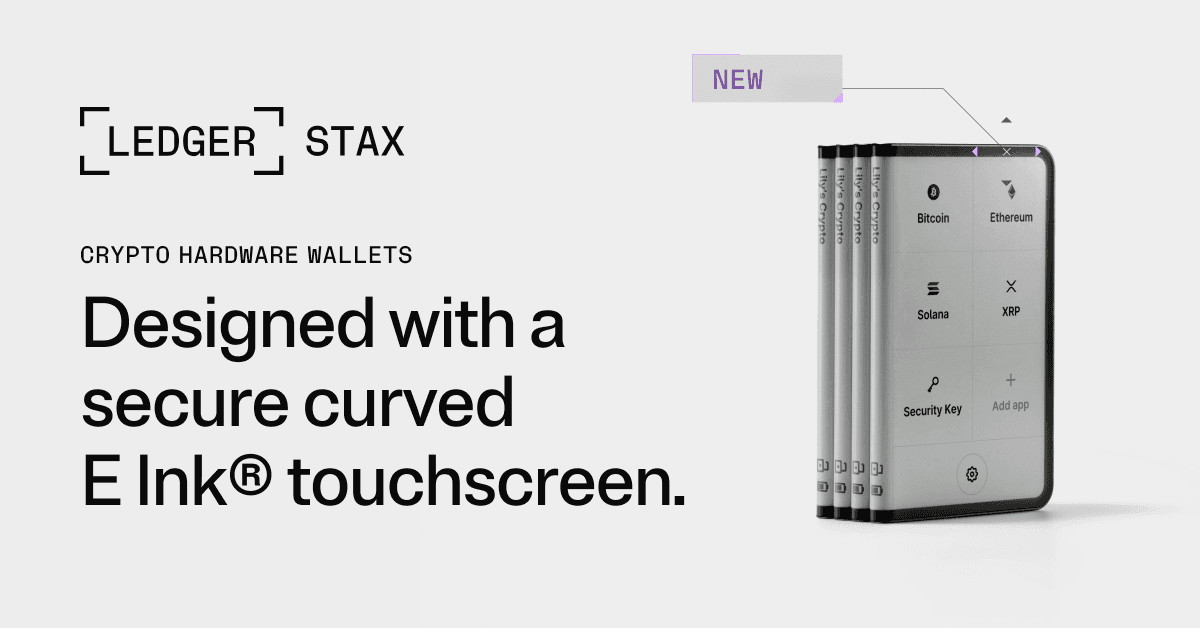
Where Stacks focuses on participation in a network economy, Bitcoin-backed borrowing addresses a more immediate need: liquidity. Ledger’s new integration allows eligible users to pledge cbBTC or wBTC through Morpho and borrow USDC or USDT without selling their BTC-linked collateral.
This can be useful for investors who need working capital, want to manage a temporary cash need, or prefer not to reduce long-term Bitcoin exposure. However, the collateral is a tokenized representation of Bitcoin rather than native BTC. Users therefore inherit the custody, redemption, depegging, and smart-contract assumptions associated with cbBTC or wBTC.
Ledger’s October 7 product documentation says Morpho transactions can be accessed directly with a Ledger signer. Clear Signing displays human-readable transaction information, while Transaction Check simulates approvals before confirmation. These controls may reduce blind-signing risk, but they do not eliminate vulnerabilities in collateral contracts, lending markets, or price oracles.
Borrowing costs can change, and liquidation remains possible. A falling BTC price can push a position above its maximum loan-to-value ratio, triggering the sale of collateral. Conservative investors should not treat a protocol’s maximum borrowing capacity as a target.
A Safer Loan Framework
Before opening a Bitcoin-backed borrowing position, stress-test it against a 30% to 50% decline in collateral value. Keep stablecoins outside the loan position for repayment or collateral top-ups, confirm which oracle determines liquidation, and assess whether market liquidity is likely to hold up during volatility.
Borrowing is most defensible when it funds a defined need and is backed by a repayment plan. Using borrowed stablecoins to buy more volatile crypto adds leverage and can turn a liquidity tool into a forced-sale mechanism.
Bitcoin Life Insurance Enters Wealth Planning
Bitcoin utility is not limited to on-chain products or short-term liquidity. Life insurance represents a more traditional, long-duration use case: applying Bitcoin to inheritance and intergenerational planning.
On October 9, Meanwhile disclosed a $37.5 million funding round led by Bain Capital Crypto to expand Bitcoin-denominated life insurance globally. The company had previously received backing from Sam Altman, and the new financing brought its total capital raised above $180 million.
Meanwhile has signed 15 brokers serving wealthy clients across Asia, Europe, and the Middle East. Its international BTC Life 1-Pay product accepts a premium of 1 BTC and provides a guaranteed death benefit denominated in BTC. Policyholders can access borrowing against policy value after the first year, subject to the product’s terms.
This matters because Bitcoin-denominated life insurance lets families define benefits in BTC units, potentially avoiding the mismatch that arises when a conventional policy pays fiat while a family’s long-term wealth strategy centers on Bitcoin.
Insurance is not equivalent to self-custody or decentralized yield. Buyers must evaluate insurer solvency, jurisdiction, exclusions, surrender conditions, policy liquidity, reserve custody, and product eligibility. U.S. investors should also seek tax and estate-planning advice before committing BTC.

Building Risk-Aware Bitcoin Utility Strategies
The strongest approach is not to deploy every unit of BTC. It is to divide holdings according to purpose.
A core reserve can remain in native BTC held in cold storage and isolated from smart-contract and liquidation risk. A smaller liquidity sleeve can support carefully collateralized Bitcoin borrowing. An income or utility sleeve can participate in vetted staking, lending, or insurance strategies when the expected benefit justifies the added dependencies.
Investors should map every product as a chain of potential failure points. For Stacks-based strategies, examine bonding rules, derivative liquidity, and reward sustainability. For Morpho loans, evaluate wrapped-BTC backing, oracle design, utilization-driven interest rates, and liquidation thresholds. For Bitcoin insurance, focus on licensing, reserves, claims terms, and geographic availability.
Protocol-health analysis can help investors monitor collateral concentration, liquidity depth, contract exposure, token incentives, and unusual on-chain flows. A nominal return means little if the underlying protocol has thin exit liquidity or depends heavily on a single custodian, bridge, or oracle.
Finally, avoid stacking multiple risks without recognizing them. Borrowing against wrapped BTC, deploying the stablecoins into a yield vault, and then using the receipt token elsewhere may appear capital-efficient. In practice, each added layer increases technical, counterparty, and liquidation exposure. Simpler positions are usually easier to monitor and unwind during market stress.
Conclusion
Bitcoin’s utility boom is turning a passive reserve asset into a foundation for institutional bonding, decentralized credit, and long-term financial planning. Stacks links institutional BTC participation to STX demand, Ledger and Morpho make BTC-backed stablecoin borrowing easier to access, and Meanwhile extends Bitcoin into the life-insurance market.
For long-term holders, the central lesson is not that idle Bitcoin must be deployed. It is that holders now have more choices. The best opportunities will preserve Bitcoin exposure while providing transparent rewards or useful liquidity—and will keep custody, liquidation, and counterparty risks within limits an investor can realistically survive.