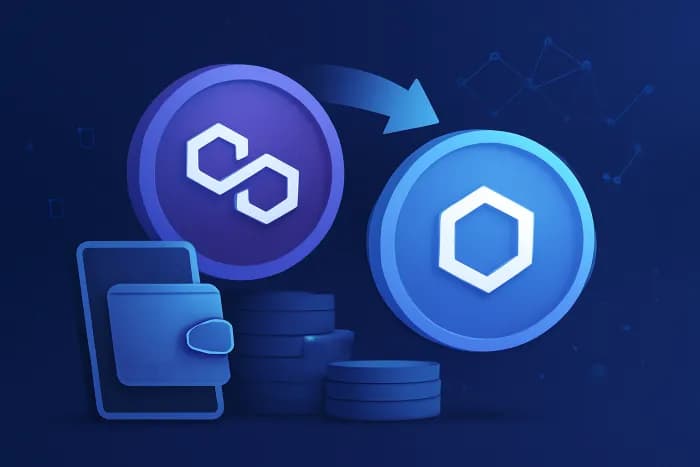
Polygon 2.0 Phase 0 Survival Guide: Migrating from MATIC to POL
Learn how to navigate Polygon’s Phase 0 upgrade, demystify PIP-18, and seamlessly migrate from MATIC to POL. This guide covers the token-swap timeline, staking layer, sequencer architecture, finality improvements, and best practices for delegators.
Title: Polygon 2.0 Phase 0 Survival Guide: Migrating from MATIC to POL
Introduction As Polygon 2.0’s Phase 0 proposals go live and the POL token rollout accelerates, it’s critical for MATIC holders, validators, and dApp developers to prepare. PIP-18 defines a backward-compatible upgrade on Polygon PoS: MATIC becomes POL for gas and staking without user-facing contract changes in Phase 0. This guide walks you through the timeline, step-by-step migration, new staking infrastructure, and best practices—so you can avoid missteps and seize the next-generation value layer.
What Is PIP-18 and Polygon 2.0? Polygon 2.0 will unify ZK-powered Layer-2 chains via an AggLayer and a shared staking layer. In Phase 0, PIP-18: • Upgrades MATIC→POL in Ethereum bridge contracts • Makes POL the native gas and staking token on Polygon PoS • Migrates validator rewards to POL emissions • Deploys new Staking Layer contracts to support validation, sequencing, proving, and data availability—all without end-user contract changes on PoS or zkEVM chains [citation]
Phase 0 Migration Timeline To turn PIP-18 into reality, Polygon has scheduled four key milestones:
- Testnet Migration (July 17, 2024): Live community testnet migration for end-to-end testing [citation]
- Mainnet Cut-Over (September 4, 2024): POL replaces MATIC on Polygon PoS; PoS holders upgrade automatically, while Ethereum, zkEVM, and CEX users must migrate manually [citation]
- POL Contracts Go Live (October 25, 2024): POL ERC-20 contracts deployed on Ethereum, enabling 1:1 MATIC→POL swaps via the Polygon Portal [citation]
- Migration Window Closes (October 4, 2024): MATIC delisted; all liquidity and fees transact in POL thereafter [citation]
With dates in mind, let’s migrate!
Step-by-Step Wallet Migration A. Polygon PoS (MetaMask, WalletConnect)
- No action needed—on-chain MATIC auto-upgrades to POL.
- Refresh your token icon/symbol to “POL” or import the contract if necessary.
B. Ethereum Mainnet & zkEVM
- Visit https://portal.polygon.technology/pol-upgrade
- Connect your MATIC wallet.
- Approve the migration contract to convert MATIC→POL 1:1.
- Confirm the transaction and pay Ethereum gas.
C. Centralized Exchanges & Custodians • Follow exchange announcements for automatic swaps. • If no swap is offered, withdraw MATIC before October 4 and migrate manually.
New Staking Layer, Sequencer Architecture & Faster Finality Polygon’s modular Staking Layer lets a single POL stake underwrite validation, sequencing, proving, and data availability—boosting capital efficiency and security [citation]. The shared AggLayer sequencer aggregates ZK proofs and inter-chain messages, posting a unified proof to Ethereum. This cuts cross-chain latency and delivers sub-10-second finality, enabling atomic asset movements across L2s [citation]. Heimdall v2, deployed July 2025, further reduces consensus time to ~5 seconds, opening real-time payments and tokenized settlements [citation].
Best Practices & Analytics Use the official Polygon Staking Dashboard (https://staking.polygon.technology/) to delegate POL. Evaluate validators on self-stake, uptime (100% checkpoint signing), moderate network share, and reasonable commission (3–5%). Diversify across 3–5 validators, and regularly restake rewards. For deeper insights, track health and risk metrics with TokenVitals’ analytics—identify slashing risks, performance anomalies, and optimal compounding opportunities in one dashboard.
POL Tokenomics vs MATIC Emissions • Polygon 1.0 MATIC rewards follow a declining schedule ending June 2025. • Polygon 2.0 POL starts with a 10 billion supply (mirroring MATIC), then transitions to a fixed 2% annual inflation—1% to validators, 1% to a community treasury governed by POL holders—for at least 10 years [citation].
Benefits & Risks for Stakeholders Benefits: • LPs gain deeper liquidity across chains via the unified bridge, boosting yields and lowering slippage. • Bridge operators move to the AggLayer to avoid wrapped assets and earn fees on high-speed transfers. • Developers tap cohesive cross-chain messaging and fast finality for DeFi aggregators, cross-chain NFTs, and gaming.
Risks: • Technical complexity: new contracts require thorough audits. • Security exposure: sequencer centralization risk if node diversity is low. • Adoption lag: slow CEX support or migration confusion may fragment liquidity. • Governance uncertainty: future emission or treasury changes depend on POL governance.
Next Steps & Conclusion
- Mark your calendar for the migration dates.
- Migrate your MATIC to POL wallet by wallet.
- Delegate POL using the official dashboard and monitor with TokenVitals.
- Explore cross-chain dApp opportunities on the AggLayer.
Polygon 2.0 Phase 0 unlocks a modular yet unified Web3 experience. By following this guide, leveraging analytics, and staying proactive, you’ll be positioned to thrive in the AggLayer era. Welcome to next-generation scalability!