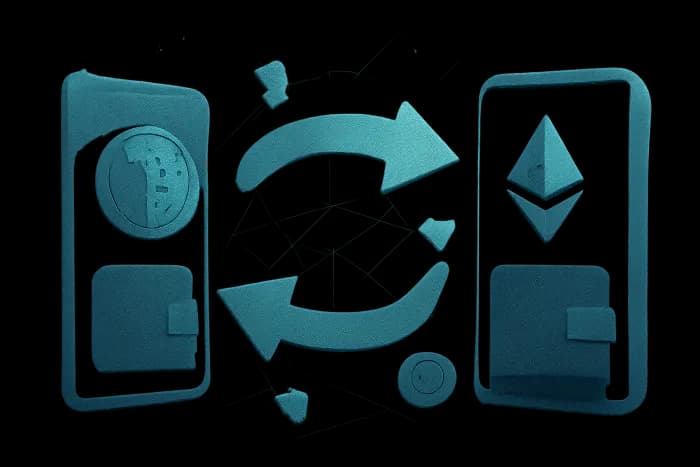
Intent-Based Cross-Chain Trading: The Next UX Leap for DeFi Aggregators
Intent-based trading protocols like Uniswap X, Hashflow’s RFQ model, and CoW Swap’s MEV-resistant solvers are abstracting away cross-chain and liquidity complexities, promising gasless, MEV-protected, bridgeless swaps and a new era of seamless DeFi UX.
Title: Intent-Based Cross-Chain Trading: The Next UX Leap for DeFi Aggregators
Introduction As DeFi ecosystems proliferate across multiple chains, traders face friction points: juggling gas tokens, bridging assets, and managing slippage across networks. Intent-based trading flips this model. Rather than orchestrate each step, users specify a simple outcome—“swap X token for Y token on chain Z”—and a competitive network of off-chain relayers, market makers, or solvers handles the rest: bridging, routing, gas payment, and MEV protection. In this post, we first examine how leading protocols implement intent-based swaps, dive into the technical underpinnings, compare performance metrics, explore generalized DeFi intents, and finally outline integration paths and value capture for developers and investors.
-
The Rise of Intent-Based Trading in DeFi UX Traditional DEX aggregators force users through multiple manual steps: chain selection, bridging, token approvals, native gas management, and slippage settings. Intent-based protocols streamline this to a single signature. • Uniswap X uses a Dutch-auction meta-aggregator. Users sign off-chain orders; professional fillers compete on price and absorb gas costs, routing through on- and off-chain pools with no MEV risk. • Hashflow shifts to an RFQ model. Quotes are requested and returned off-chain with zero-slippage guarantees, then settled on chain in a bridgeless, MEV-protected flow. • CoW Swap batches trade intents into uniform-clearing auctions. Solvers bid to maximize user surplus; trades execute at a single clearing price, neutralizing sandwich attacks.
-
Technical Foundations of Intent-Based Cross-Chain Swaps 2.1 Cross-Chain Messaging and Settlement • Uniswap X: Reactor contracts lock funds on the source chain; off-chain fillers bond against emitted fill events. Funds release after optimistic challenge verification. • Hashflow: Wormhole relays signed quote proofs from the source to destination chain, triggering automatic asset release without external bridges. • CoW Swap: Community proposals outline cross-chain solver participation via bonded settlement contracts and shared order books. 2.2 Escrow and Funds Management • Uniswap X reactors escrow user tokens and filler collateral, ensuring atomic fills or refunds. • Hashflow market makers pre-deposit inventory on each chain, eliminating dynamic pool gateways. • CoW Swap users deposit into batch pools; solvers match Coincidence-of-Wants orders before tapping AMMs for residuals. 2.3 MEV Protection and Incentives • Private Order Flow: Quotes remain off-chain until execution, blocking mempool frontrunning. • Uniform Clearing Prices: Batch auctions remove sandwich attack vectors. • Competitive Rebates: Fillers and solvers earn token rewards and MEV rebates tied to surplus delivered.
-
Performance Comparison Key metrics show intent-based systems outperform legacy aggregators: • UX Steps: 4→1 • Native Gas Tokens: Required→None (relayer-paid) • Swap Latency: 5–30 min→1–6 min • MEV Exposure: High→Minimal • Capital Efficiency: Fragmented pools→P2P matching & aggregated liquidity These gains reclaim MEV value for users, reduce capital lockup, and tighten spreads.
-
Beyond Swaps: Generalized DeFi Intents With cross-chain intents proven on swaps, new workflows emerge: • Limit Orders & TWAPs: Specify price/time; solvers execute automated strategies. • NFT Mint & Purchase Bundles: Single-click intents for approvals, pricing, and execution. • DAO Treasury Rebalancing: Express target allocations off-chain; solver networks rebalance over time, capturing surplus back to the treasury. This vision of “DeFi Hooks” promises composable workflows with seamless UX and MEV protection.
-
Integration Paths and Value Capture Developers can build on intent primitives via: • Uniswap X Trading API & hooks for order submission and filler discovery. • Hashflow RFQ Routing API for quote requests and settlement. • CoW Swap Composable SDK for batch intent placement and solver bidding. Investors can track protocol health through token metrics: • UNI: Fees and governance share from cross-chain swap volume. • HFT: RFQ fee revenues and buyback programs. • COW: Solver rewards and DAO treasury accumulation. Monitor API adoption, on-chain intent volume, and revenue splits to gauge UX-driven growth beyond TVL.
-
Challenges and Considerations • Security Risks: Relayer misbehavior, bridge vulnerabilities, or oracle attacks. • Regulatory Uncertainty: Cross-border messaging and custodial considerations. • Adoption Barriers: Developer onboarding, UX education, and liquidity depth. Addressing these will be key to broad DeFi intent adoption.
Conclusion Intent-based cross-chain trading is redefining DeFi UX by abstracting bridging, gas management, and MEV risk into off-chain execution networks. Uniswap X, Hashflow, and CoW Swap demonstrate how a single signature can unlock faster, cheaper, and more secure swaps. As generalized intents extend to order strategies, NFT bundling, and DAO rebalancing, DeFi will evolve into a unified, single-interaction experience—unlocking new possibilities for developers, traders, and investors alike.